

3 Rules for Garnishes Most Bartenders Ignore
Top F&B experts share essential rules on freshness, balance, and edible presentation every bartender should follow.

| Estimated Reading Time: 4 Minutes
BARTENDERSthis is how you stop fucking up your drinks
This is largely because many bartenders, myself included, had minimal training. We often start as barbacks and work up to being swashbuckling ‘mixologists’.
Or someone with a serving resume gets handed a drink list and encouraged to ‘make it work.’ But there is an ecosystem within each cocktail with a biome that falters off-balance with each inexperience.
There’s a million ways for a drink to be wrong, but many times, it’s because of the garnish. Most bartenders in New York City aren’t getting a rule book for garnishing.
So, I decided to talk to professionals of the industry and mix up our own ‘no-no’ list (you’re welcome). Before we dive into our house garnish rules, let’s first chat about why they are used.
Human taste is extremely connected to the sense of smell. Before we taste something, our nose does an initial test.
Then, as we chew, air moves into our nasal cavity where our brain combines those retro nasal olfaction signals with the five tastes on our tongue.
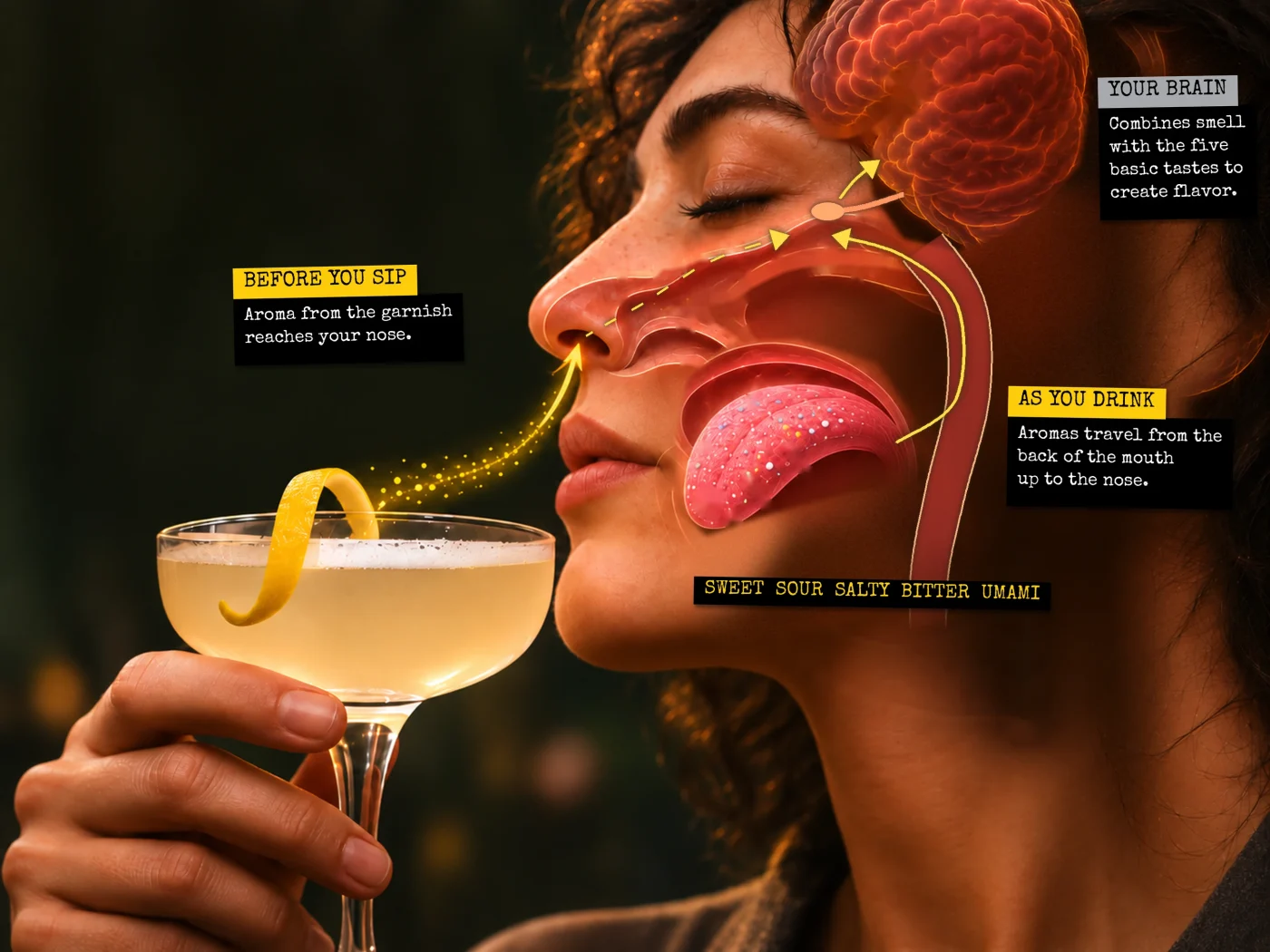
With cocktails, the garnish – as it sits on the rim– is the first thing we take in. That smell translates to what we perceive as flavor, and so science happens.
When the garnish is not doing its job, the bartender has ruined the drink before the customer has even sipped it.
A garnishing is also a sensory experience meant to balance the flavors in the drink. For example, the lime in a Gin & Tonic balances the botanical of the gin and the bitterness of the tonic.
If a dehydrated lime is plopped in a rocks glass, it’s not adding anything to the flavor profile, but sitting in a sog on the glass. It’s a delicate business to make a cocktail that skillfully balances liquor, syrups and garnishes.
So, what are the rules for cocktail garnishing?
Who knows?
But we have three suggestions.
FRESH, FRESH, FRESH
The American Bartender’s School Director and Owner Joseph Bruno cannot stress enough: fresh is best. I took a phone call with Bruno to talk about his perspective on garnishes throughout his 30 year nightlife career and 25 year teaching one.
Much of our talk boiled into laying the foundations of a bartender; know what you’re doing, keep it fresh, honor the classics.
“There is nothing more skeevy, in my mind, than having pre-cut garnishes that are sitting in a tray picking up bacteria, popping them into cocktails,”
Pre-batching garnishes like strawberries, limes and lemons result in a loss of aroma. The oils from the peel fade, the citrus dry and the texture turns soggy with oxidization.
The fast-paced, high-volume environments in a bar often shift attention from quality of drink to speed of service… but Bruno and many others can tell the shortcut.
Take Aldar Ochirov. Ochirov is a mixologist and bar consultant who specializes in unique cocktail design. He uses creative garnishes, like highly designed edible papers, that have won him online notoriety.
These papers come on sheets that can be 100-150 garnishes, but “finding the right olive can actually be the more complicated task.” In a message, Orchirov stressed the importance of the quality of garnishes he uses.

“I often seek out the best olives, visiting markets, speaking with suppliers and spending days finding exactly what I want: large olives with the pit intact, a pleasant texture, and great flavor,” wrote Ochirov.
Even if it’s three olives in a martini glass or a lemon wedge, take pride in your garnish.
DON’T OVER GARNISH
The creative premium for bartenders has the risk to challenge the basic elements of garnishing. Bryan Evans, bartending instructor with New York Mixology, told us to look no farther than the Bloody Mary where “anything goes.”
Though these have never been my chosen drink, I recall a wonderful morning featuring a double-decker oyster meal atop our Bloody Mary. However wonderful the meal was, the drink could have been a Diet Coke for all I remember.
The tomato juice in the classic Bloody Mary example creates a thick mouthfeel. The heavy spices, too, translate to an unctuous weight in the mouth.
Utilizing a simple celery stick can cut through that harsher sensation while also allowing the customer to stir the drink. An entire seafood meal on top may look interesting, but it’s not helping the drink.
Evans wasn’t the first person to mention the Bloody Mary.
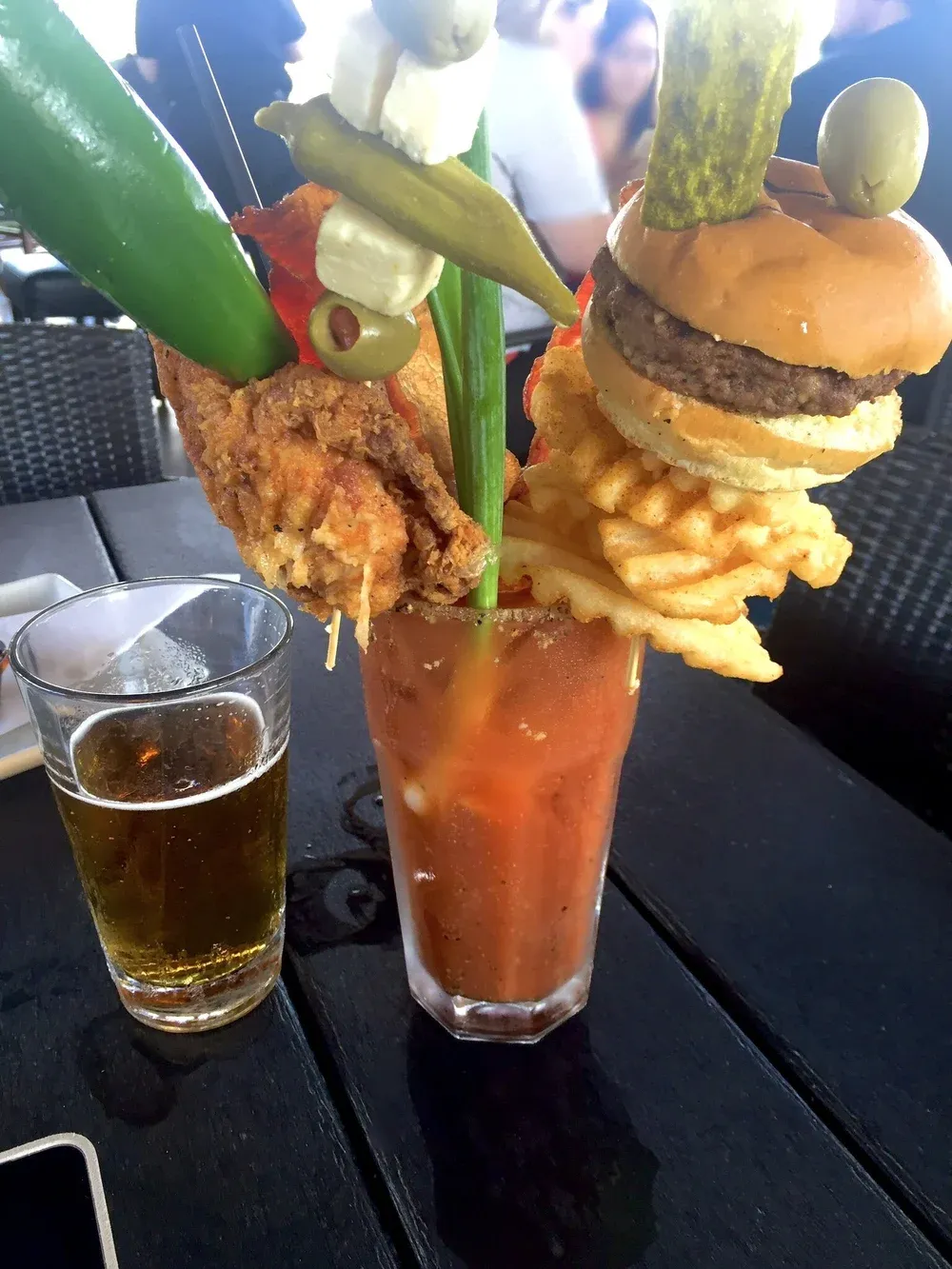
When Bruno spoke with 86’d ME, the topic had come up, too. He mentioned the seafood meals that are built on a Collins glass. We laughed on the call, but Brunk broke it down simply.
“People try to innovate to the point they destroy.”
Even in the world of ‘modern bartending’ as Ochirov says, there should be a reverence for balance in a drink. If a garnish is not actively adding to the cocktail, then it may not be needed.
“Sometimes, a small, neatly cut citrus wheel is enough– or no garnish at all,” Ochirov wrote.
MAKE IT EDIBLE
Before you throw your cutesy Pina Colada umbrella at me, there are exceptions to cocktail garnishes always being edible. But not many.
The garnish is the welcome mat to the drink, or in another metaphor, the shoes that bring an outfit together. In order to bring a drink together, another taste is ideal to cut the flavor of any alcohol or balance the sweetness of the cocktail mix.
Having a decorative garnish also adds another obstacle for the customer: is it difficult to get a sip?
Bruno is more of a traditionalist who offers a homage to the long-lived basics of drink preparation. Thus, he thinks garnishes should always be edible.
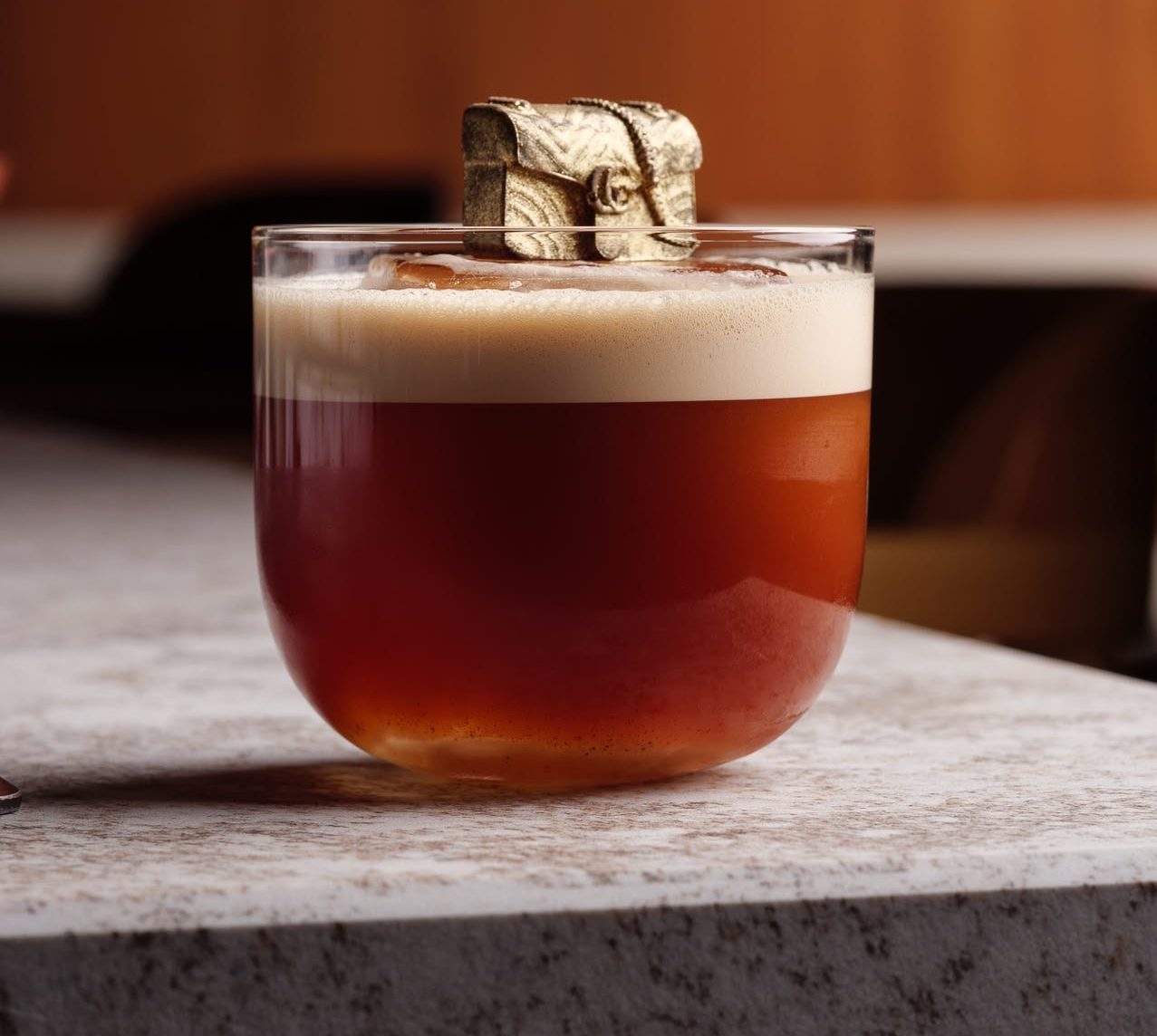
If it’s in the glass, it should be able to be consumed. “People do eat and drink with their eyes,” Bruno said, understanding why flashy garnish attracts an audience. “But it’s not the best way to complement a cocktail.”
“a garnish fails the moment it creates active customer discomfort. “Evans says. He used the example of a citrus expression gone wrong, where the bitter peel runs oils on the rim that can numb the customer’s tongue. But discomfort can also come from finicking around with a decoration that distracts from the drink.

“While I personally side with the philosophy of minimalism– adding nothing to a cocktail unless it is edible and actively enhances the flavor– the modern bar industry is different,” wrote Evans.
This ‘modern bar’ that often revolves around social media has resulted in what Ochirov calls “the garnish game.” This game hinders on making new drinks, developing new looks and drawing inspiration from non F&B fields.
This can create loud cocktails with louder garnishes.
Though Ochirov experiments with his drinks, he too, tries to make his garnishes edible; “…there are exceptions to every rule, and sometimes a non-edible garnish has its place.
Me neither, brother.
“Trends change, but creativity and attention to detail remain timeless,” concluded Ochirov.
There are plenty of bars that have high-standards and amazing drinks. There are countless more bars with low-standards and enjoyable drinks.
But it never hurts to try to do better. Even though our favorite neighborhood dives may not have an American Bartender’s School alum or name brand olives, the bartender can still think before pre-cutting lemon wedges.


Trending

Weighing Culinary Diplomas Against Kitchen Battle Scars

“I Was Wrong, Kinda”

Fear And Loathing In Woody Creek
Nuts & Napkins

The Manager On Duty

The 5 Best Cities for Restaurant Workers to live in 2026
Non-Slippin In The Kitchen

Suing The System

Hooking Up With Coworkers

Serving Philanthropy with a Side of Santo