


The Shake Down :The Truth Behind SC’s New Mandatory Alcohol Training.
The ServSafe Money Grab: SC’s Mandatory Training Law & the New May 1st Deadline

| Estimated Reading Time: 7 Minutes
t's 2 am, I'm tired, and sitting in front of my laptop after a 15k step shift.
I’m staring at my screen while they stare back at me (I guess).
I’m 2.5 hours into taking the ServSafe class again and wondering why?
Why Am I Doing This Again?
Look, testing and licensing in this industry are nothing new. In Vegas, you had to get a liquor card (TAM), a food handlers card, and sometimes a gaming card if you’re in a casino.
And currently in SC, it’s different; here, it’s only required for alcohol service (for now).
So about 5 months ago, I was working for a hotel bar and was required to do a ServSafe liquor test.
It sucked, but seemed reasonable.
I think it took 4 hours out of my life, maybe a bit more, watching videos, and there was a clock, so you could not just take the test even if you’ve been in the industry for 100 years and know all the answers.
You had to wait.
Fine.
Got it.
Doesn’t expire til 2028. The place I worked paid for it. See you again in 3 years.
A few months later, at my new job, I posted on the staff bulletin board.
All Servers, Bartenders and Managers in the State of South Carolina MUST complete the new ServSafe course by March 2, 2026, or they cannot work the floor.(SC Code Title 61, Chapter 3)
So, as any rational person would, I figured I was fine. I had just taken the course from the same source, still had two and a half years left on it.
Maybe they’d transfer it over, give us a little extra time, something. Anything. Nope.
Everything before January 18, 2026, is erased. Like it never happened. And now here I am, doing it all over again.
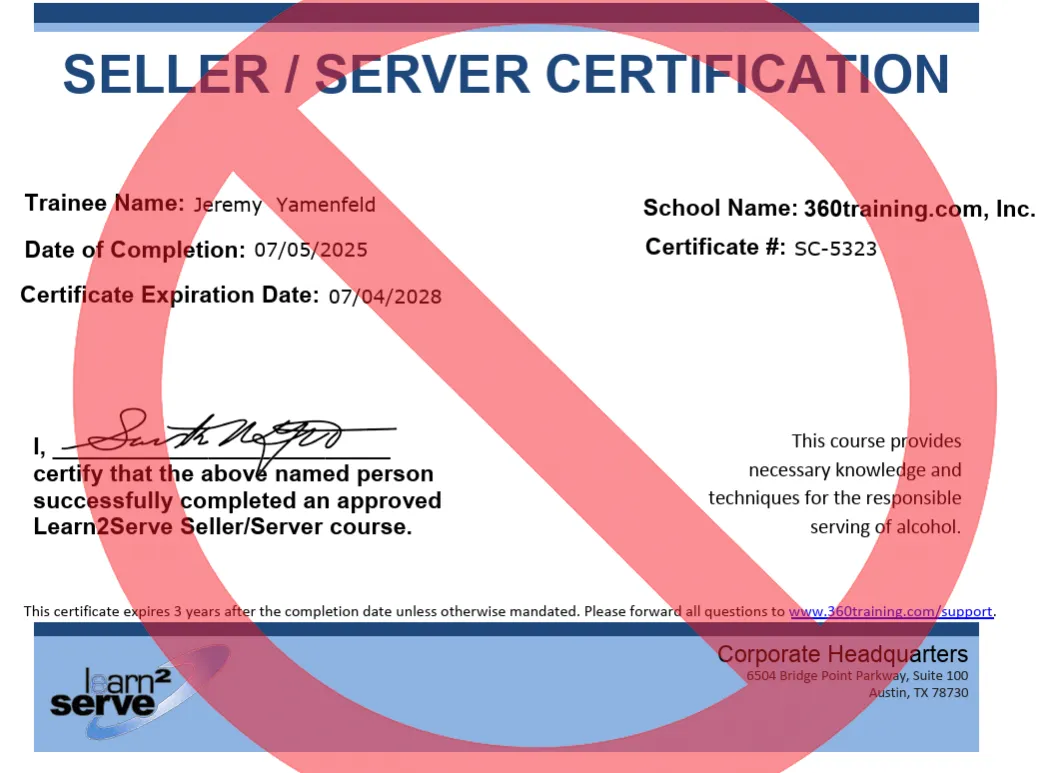
Invalidated ServSafe and Serve Safe certificate proof | Image by My certified proofrendered useless by a sudden change in regulations.
Knowledge is good, I get it.
But the Oscar-worthy performances in the videos, the questions that have nothing to do with real life behind the bar,
The Guardian Browser, invasive software that honestly feels like malware, and the issues that come along with it.
Good planning, SC, lol.
Who Has To Take It
If your job involves serving, handling, or overseeing alcohol in South Carolina, you are required by law to complete an approved training course.
- ▸Servers
- ▸Bartenders
- ▸Sommeliers
- ▸Managers
- ▸Room Service Staff
- ▸Catering & Events Staff
- ▸Anyone who checks ID as part of their role
Not sure if this applies to you? If you hand someone a drink, you’re almost certainly on the list. For approved providers and the full requirements list, visit our 86’d Me SC Alcohol Service Certification Hub.
The exam?
There is a camera watching you the whole time when you take the test.
Training is at least four hours, online, and you cannot skip ahead.
I’m waging my wars behind my face and above my throat, but I’m stuck in this linear loop, finishing one module before the next one unlocks.
For the full list of requirements, approved providers, and deadlines, check our 86’d Me SC Alcohol Service Certification Hub.
Penalties and Fines
| Establishment — Allowing Uncertified Staff to Serve Per violation, per person serving without certification |
$500 per violation |
| Establishment — Failure to Maintain or Produce Certificate For failing to keep or provide a copy of the alcohol server certification on demand |
$100 per violation |
| Establishment — First Offense Non-Compliance General non-compliance with training requirements |
Up to $2,500 per violation |
| Establishment — Second Offense Within Two Years Escalating consequence for repeat non-compliance |
14-Day Suspension license suspended |
| Establishment — Third Offense Within Three Years Permanent license revocation. No certified staff = no evidence of due care. |
Your License permanent revocation |
Note: Exact fine amounts are set at the SCDOR level and may be updated. For the full penalty schedule and citation process, visit our 86’d Me SC Alcohol Service Certification Hub.
Ghost Certificates
Here’s what really gets me. When the law went into effect on January 1 the state hadn’t approved a single training program yet.
They told every server, bartender, and manager in South Carolina they had to comply, then gave them nothing to comply with.
The first approved provider didn’t go live until January 9.
The clock was running and there was nowhere to go.
But honestly, it was the moment they told me my cert was dead that it clicked.
I had just recently taken this course. Same program. Same company. Still valid for two and a half more years.
And none of it counts.
That’s when I realized this has less to do with liquor awareness and more to do with money.
And don’t get me wrong, having more knowledge and awareness behind the bar is never a bad thing. But somewhere along the way, somebody looked at this and saw dollar signs.
Timeline
| Jan 1, 2026 | Law takes effect. Zero approved providers exist. Chaos |
| Jan 9, 2026 | First approved training provider goes live. |
| Jan 18, 2026 | Reset date. Any certification before this date does not count. Erased |
| Feb 5, 2023 | Six US senators send formal letter demanding NRA disclose how ServSafe course revenue is used. |
| Feb 25, 2026 | Only 20% of SC alcohol servers have completed training. |
| Feb 27, 2026 | SC House votes to extend deadline from March 2 to May 1. |
| Mar 2, 2026 | Original deadline. Extended |
| Mar 5, 2026 | Lawmakers aiming to get extension signed into law by this date. |
| May 1, 2026 | New deadline. All covered SC alcohol service staff must be certified. New Date |
Past events shown for context. May 1 is your date. Allow up to two weeks for your certification to appear in MyDORWAY after passing. Do not wait until the last minute.
Deadline Extended
Lucky for you, and honestly lucky for me, I was a little behind on publishing this one.
By the time I finished writing this, the SC House had already voted to push the deadline from March 2 to May 1.
Turns out only about 20% of alcohol servers in the state had completed the course. One lawmaker even said out loud that the state never stood up a program that could actually be completed until after the January 1st deadline.
But here is where it gets really good.
The Senate passed the extension too, except as of March 3 the Governor still has not signed it.
Which means the deadline was yesterday, the extension exists on paper, and nobody made it official in time.
I took this course five months ago, got wiped on January 18, am still working on it, and now the deadline to do so is in legal limbo. So technically, I cannot work the floor right now, not because I am untrained, but because South Carolina cannot get a signature on a piece of paper.
South Carolina, everybody… Let’s give them a hand.
So breathe. You have got time. Probably.
But do not wait till the last minute, like me.
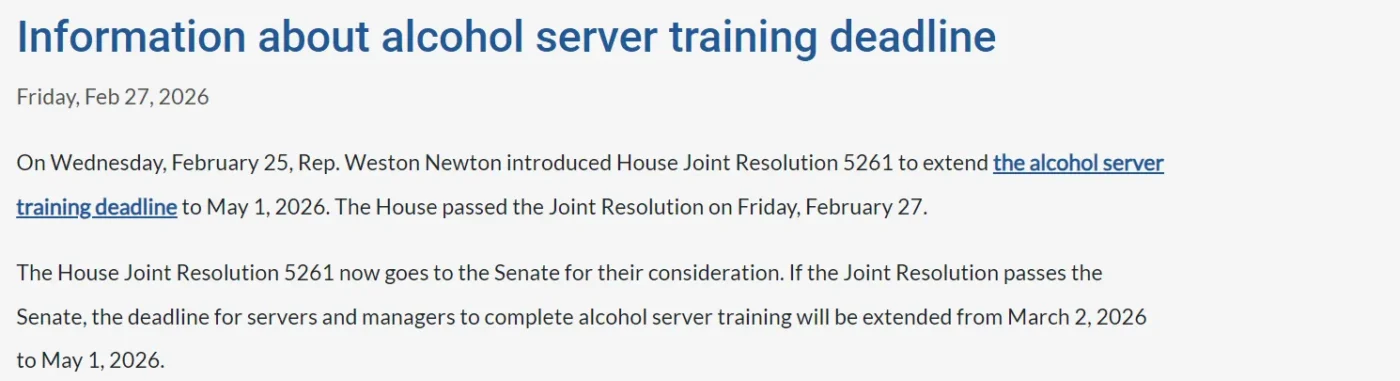
South Carolina alcohol server training deadline May 1 2026 | Image by Staying compliant: The shifting deadlines for mandatory SC alcohol server training.
Follow the Money
With me being me, I couldn’t help myself and had to dig into who really benefits the most.
Insurance companies have been pushing for mandatory server and bartender training for years.
A certifiable, I mean certified, staff lowers exposure for the insurance company, and they are not in the business of paying out more than necessary.
Less risk for the insurer means lower required coverage for your boss.
And since 2017, restaurants and bars have been required to carry a Million Dollars in coverage just to stay in business, so this is a big relief.
But relief comes with conditions.
Here is why that million-dollar number matters. South Carolina had a law that meant a bar found even slightly at fault in a drunk driving lawsuit could be forced to pay the entire settlement.
Insurers bailed.
Premiums exploded.
One Charleston bar owner watched his rates jump from $25,000 to $165,000 in 18 months.
A sitting state lawmaker gave up his own liquor license because his premiums went from $1,500 to $28,000 a year.
Bars that had been open for decades closed, not because they did anything wrong, but because they could not afford to stay insured.
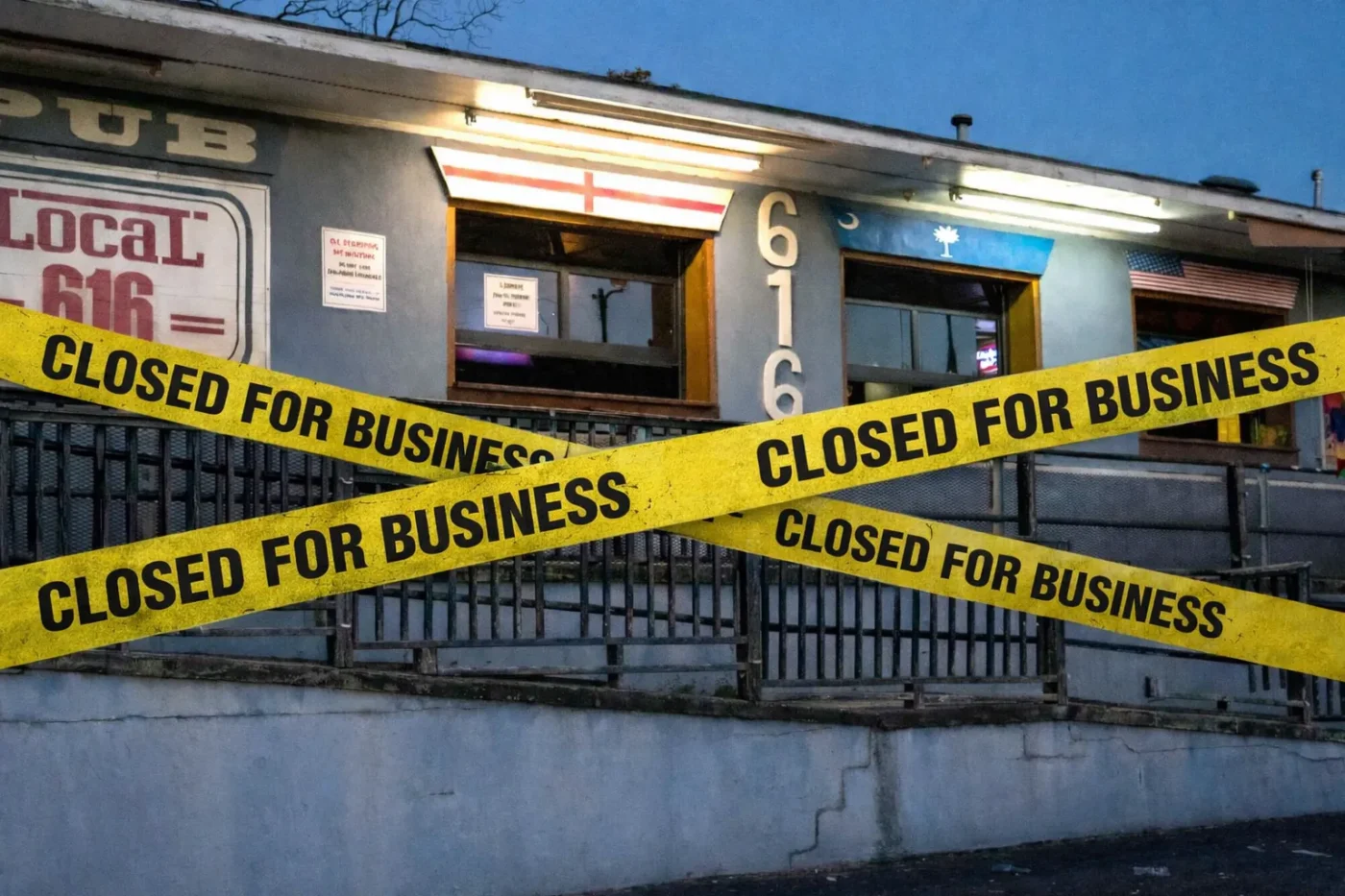
Restaurant Closed for Business | Image by A restaurant forced to close its doors.
The Responsible Hospitality Reform Alliance, a group of restaurant and hotel owners, took it to the state.
Fix this or watch us disappear.
The state agreed, but the deal came with a price.
Bar liability got capped, and the legal standard got raised. In exchange, every server gets certified.
Your certificate is not just your boss saving money. It is the price the entire industry agreed to pay to survive.
Under the new law, if a drunk driving accident happens and the bar is found partially at fault, they are now only responsible for their share, capped at 50%.
Before this law, a bar found 1% at fault could be handed the entire bill.
That is no longer the case.
The legal standard changed, too.
A plaintiff now has to prove the server knowingly served someone who was visibly intoxicated.
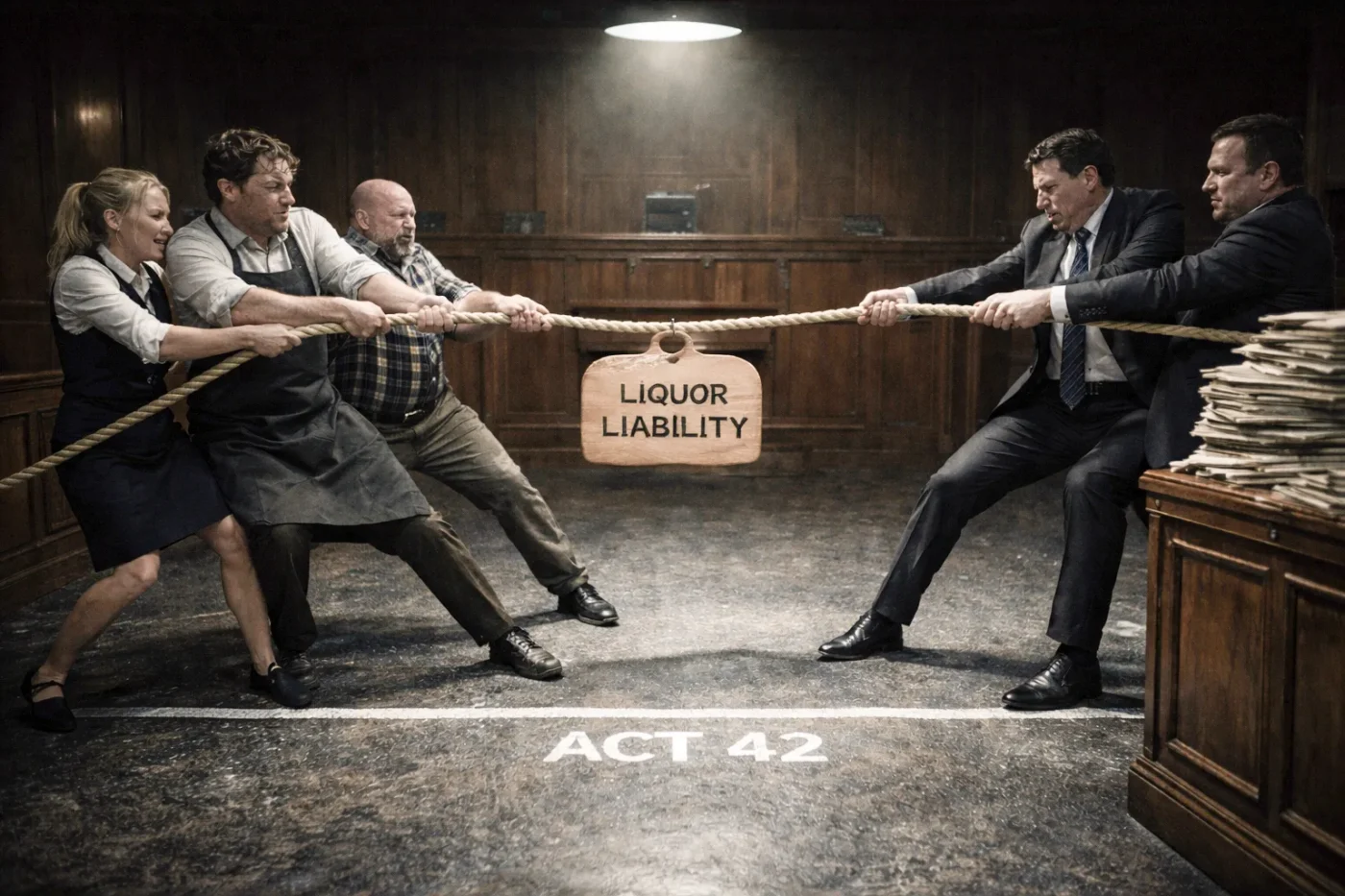
Liquor Liability Tug-of-War | Image by Restaurant workers and corporate lawyers face off over liquor liability in a symbolic courtroom tug-of-war.
Before, it was essentially strict liability. They were drunk, you served them, you were liable, end of story.
But here is the catch. None of those protections mean anything if you are not compliant.
No certified staff means no evidence of due care, and under the new law, that can mean automatic license revocation on top of everything else.
Without compliance, when something goes wrong, you are completely on your own.
But if you do comply, there is a real financial reward.
The state built in what they call mitigation credits.
Get your entire staff certified, and your boss’s required minimum coverage drops by $100,000.
Stack that with other measures like stopping alcohol service at midnight or keeping booze under 40% of total revenue, and that number can drop all the way down to $300,000.
For a bar that was forced to carry a million dollars in coverage just to open its doors, that is a significant difference.
I get it from their perspective; it makes a ton of sense to get everyone to comply. And I applaud those establishments that went above and beyond to not only pay for the course but also compensate their staff for the hours spent taking it.
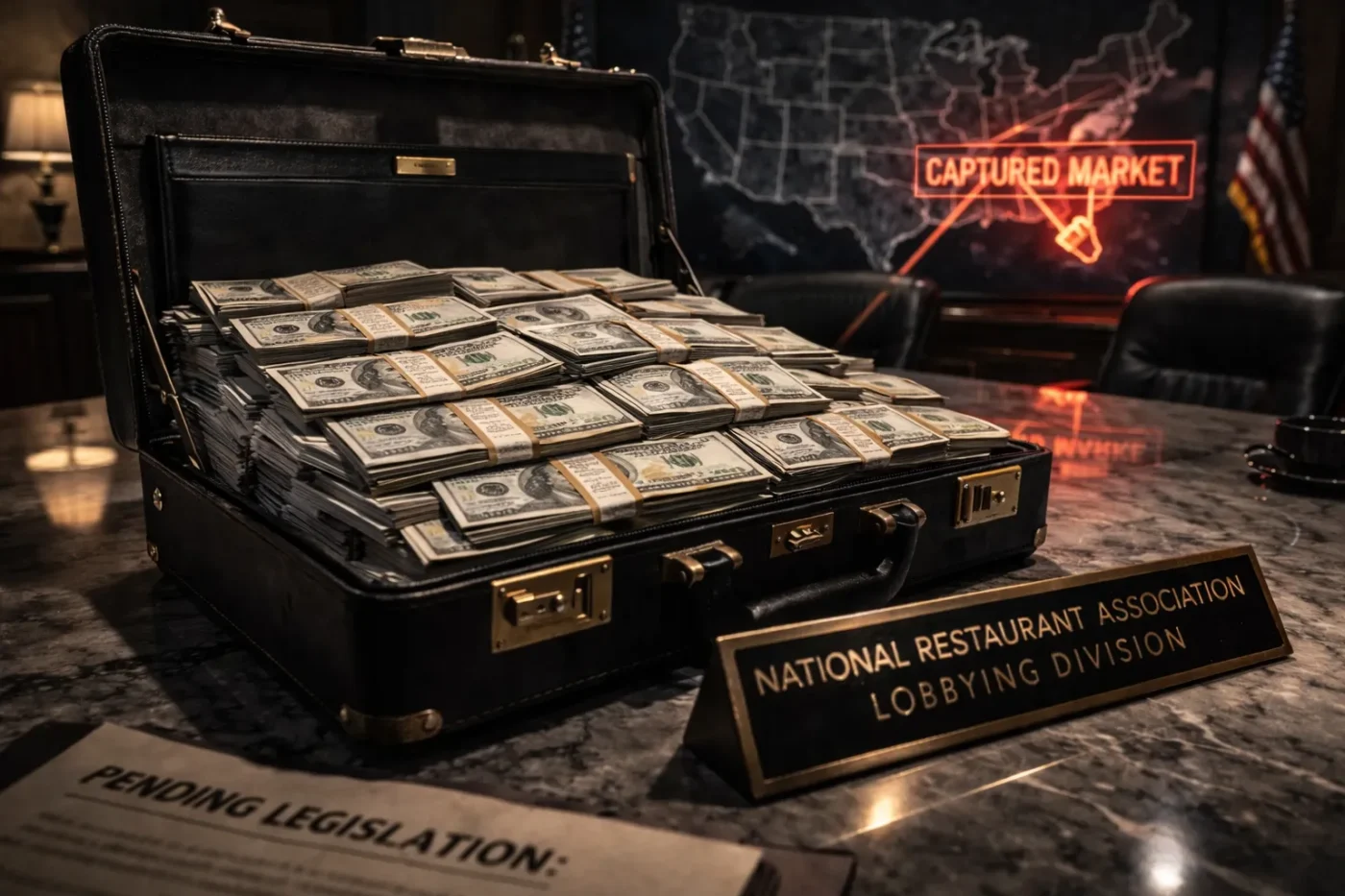
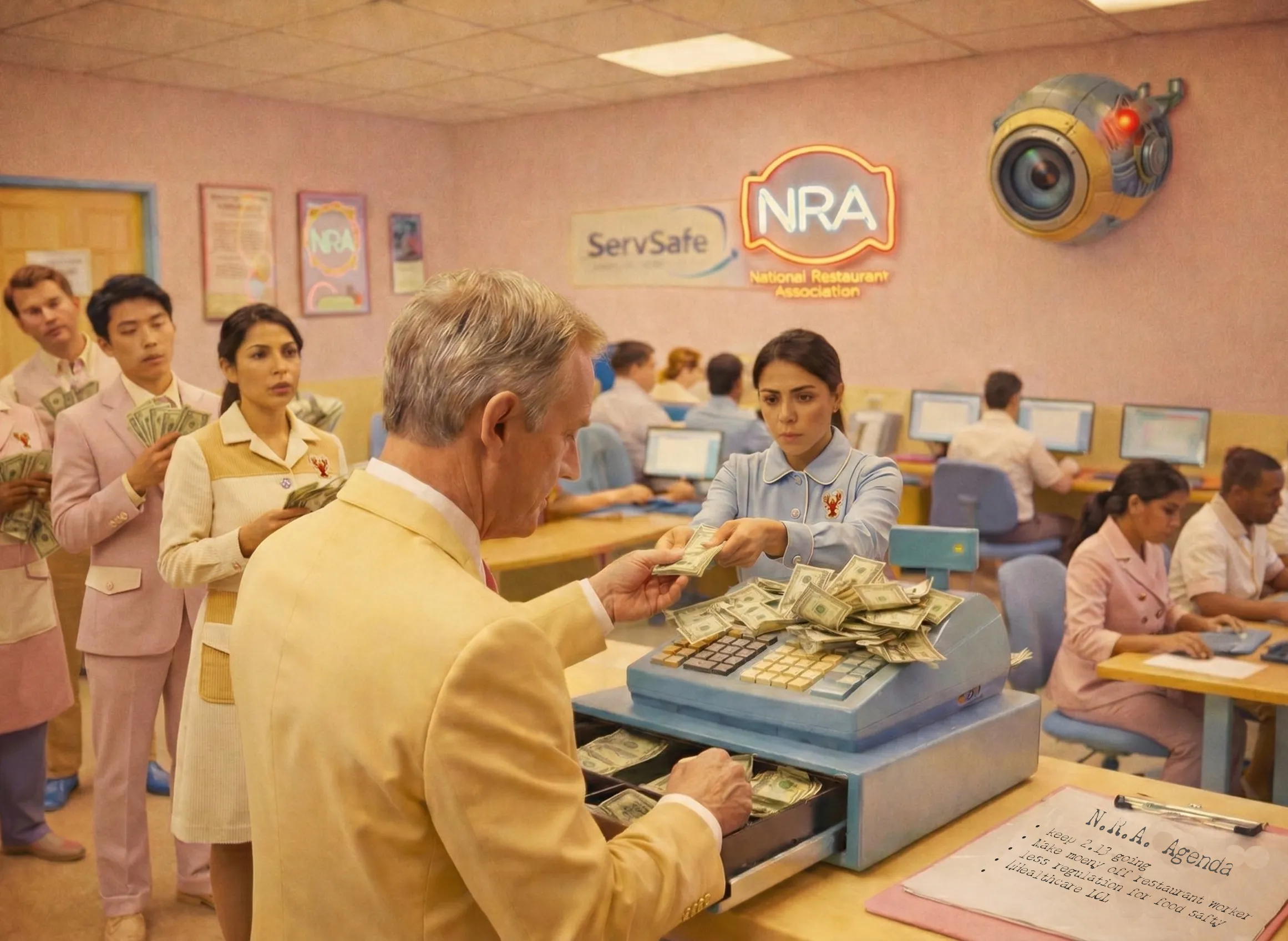
NRA Lobbying Money | Image by Nra Lobbying
Show Me the Money
And then there’s the state, with fines all over the place.
From non-compliance to compliance, they will do just fine in this whole thing.
But my biggest issue is ServSafe itself.
They are like the Kleenex (snott included) of food and beverage courses, which is whatever, except for the fact that they were taken over by the NRA in 2007. (Not the Gun Club)
And since then, they bought out NRFSP, which was their biggest competition.
The National Restaurant Association is the largest and most influential lobbying group opposing higher wages for restaurant workers.
They are the main reason there are still states paying $2.13 an hour.
They spent $46 million lobbying against raising the minimum wage for restaurant workers between 2007 and 2022.
In other words, they are trash.
So it is ironic, or is it moronic, that we, the restaurant workers, are bankrolling the enemy.
They lobbied for these mandatory training laws across the country so they could profit off F&B’rs forced to comply.
And SC just became the latest.
You aren’t just taking a class.
You are paying the salary of the people making sure you never get a raise.
Six US senators sent a formal letter demanding that the NRA explain exactly how the money from those courses was being used.
The same day, two ServSafe graduates filed a federal lawsuit on behalf of millions of F&B’rs who never knew where their money was going.
That story is far from over. TBC.

Trending
Weighing Culinary Diplomas Against Kitchen Battle Scars
“I Was Wrong, Kinda”

No Tax on Tips: The 2026 Guide to Your $25,000 Tax Deduction
The Top 5 Cities For F&B’rs
Nuts & Napkins

Hooking Up With Coworkers
The Manager On Duty
Who is the Bitchy Waiter
Serving Philanthropy with a Side of Santo

Top 5 Cities Where F&B Pros Shouldn’t Detour